CMU MechE shines at ASME Conferences
Kaitlyn Landram
Aug 28, 2026
At the 2026 ASME International Design Engineering Technical Conferences and Computers and Information in Engineering Conference, CMU’s Department of Mechanical Engineering received three best paper awards and a young investigator award for tackling core challenges in design, robotics, and manufacturing.
How can AI turn 2D engineering drawings into 3D models faster and more accurately?
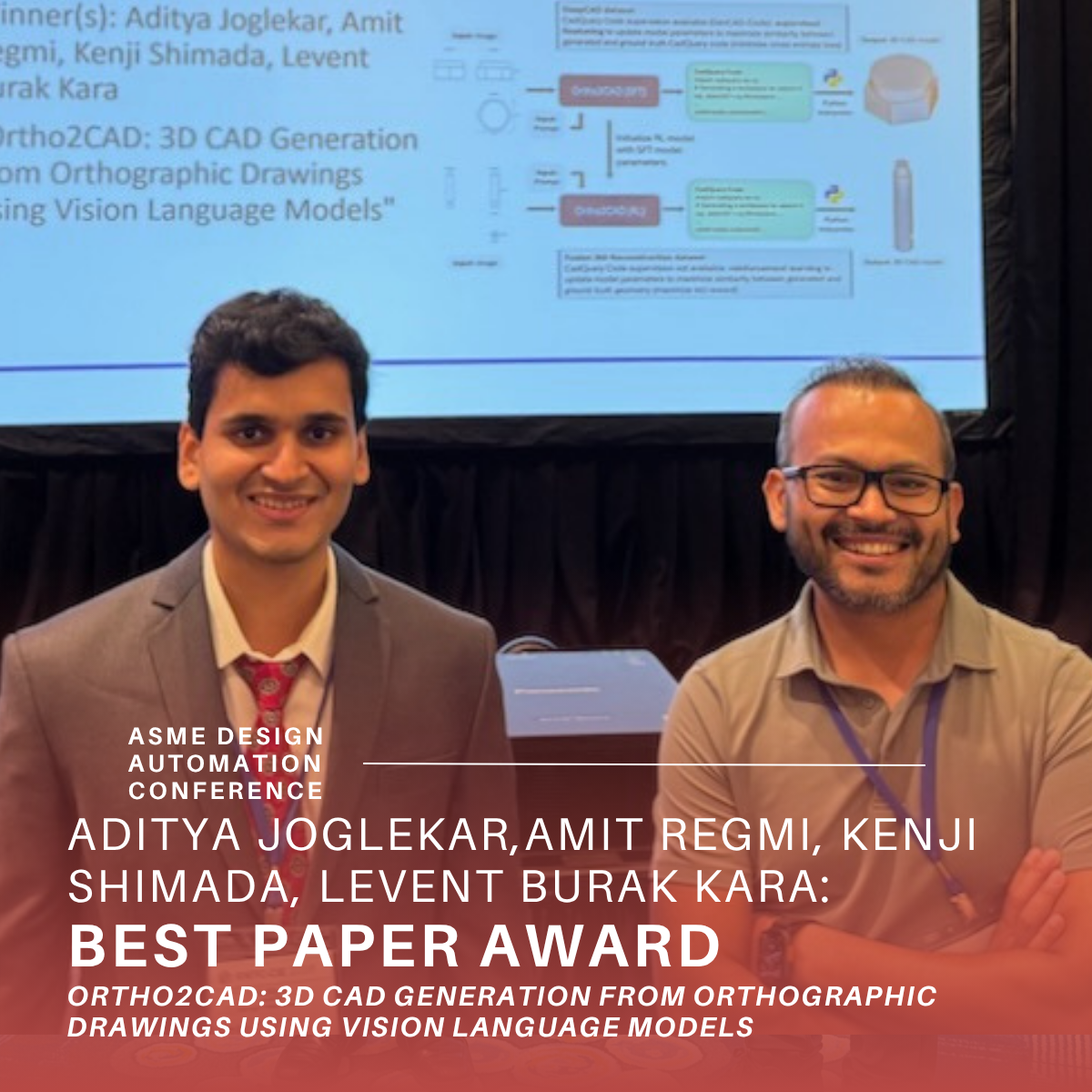
Aditya Joglekar, Amit Regmi, Kenji Shimada, and Levent Burak Kara received a best paper award for their work: Ortho2Cad: 3D CAD generation from orthographic drawings using vision language models. Ortho2CAD is an AI tool that can “read” 2D engineering drawings and reconstruct them as 3D CAD data. By automating a process that manufacturers often perform manually, Ortho2CAD could help companies evaluate parts and generate quotes in minutes instead of days or weeks.
How can we design a robot’s body and brain together to help it perform tasks more effectively?
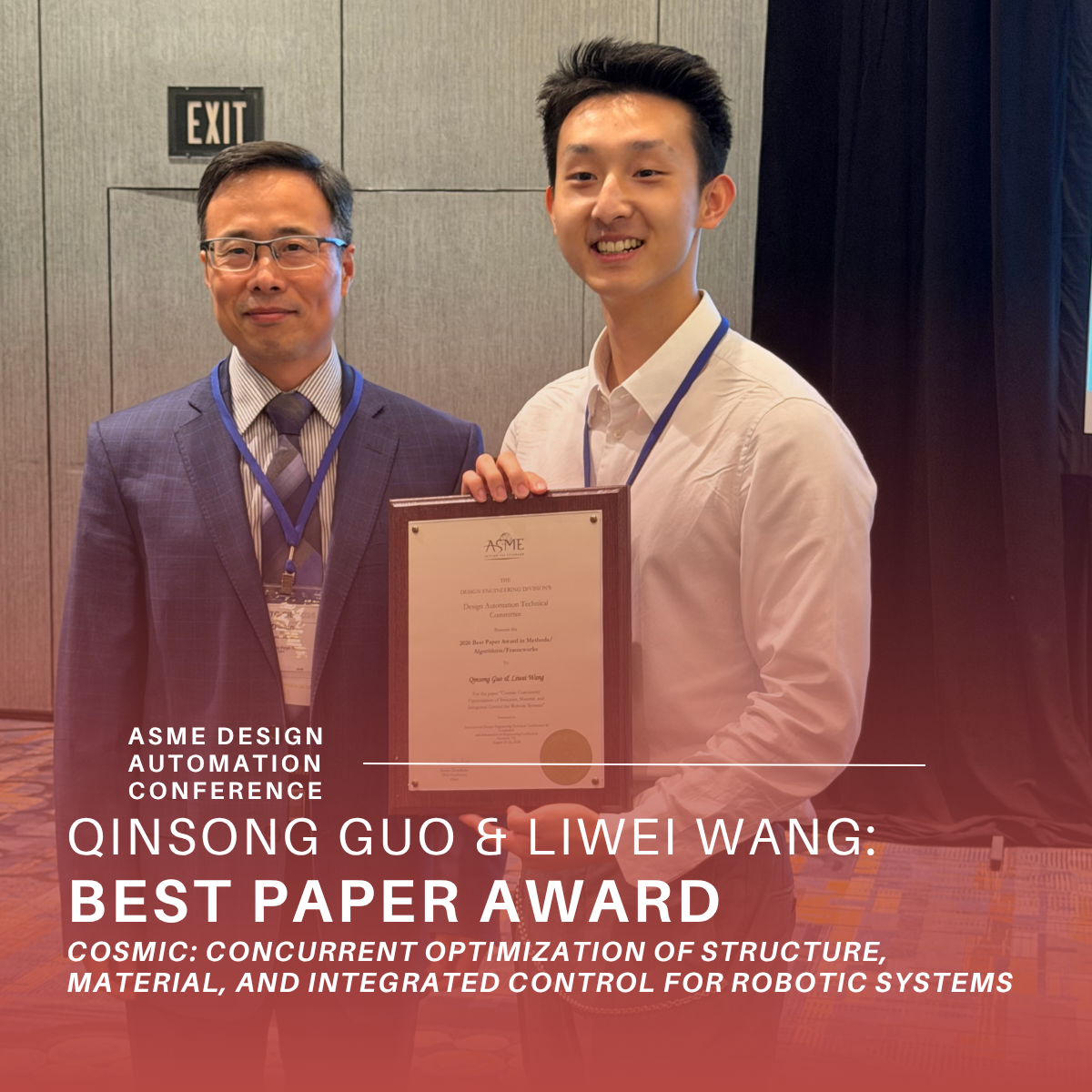
Qinsong Guo and Liwei Wang received a best paper award for their work: COSMIC: Concurrent optimization of structure, material and integrated control for robotic systems. Their framework designs a robot’s structure, materials, and control system together rather than treating each separately. By accounting for how these elements influence one another, the approach can discover more effective ways for robots to move and perform tasks, paving the way for more autonomous and adaptable robotic systems.
How can AI learn which decisions lead to better outcomes on a manufacturing production line?
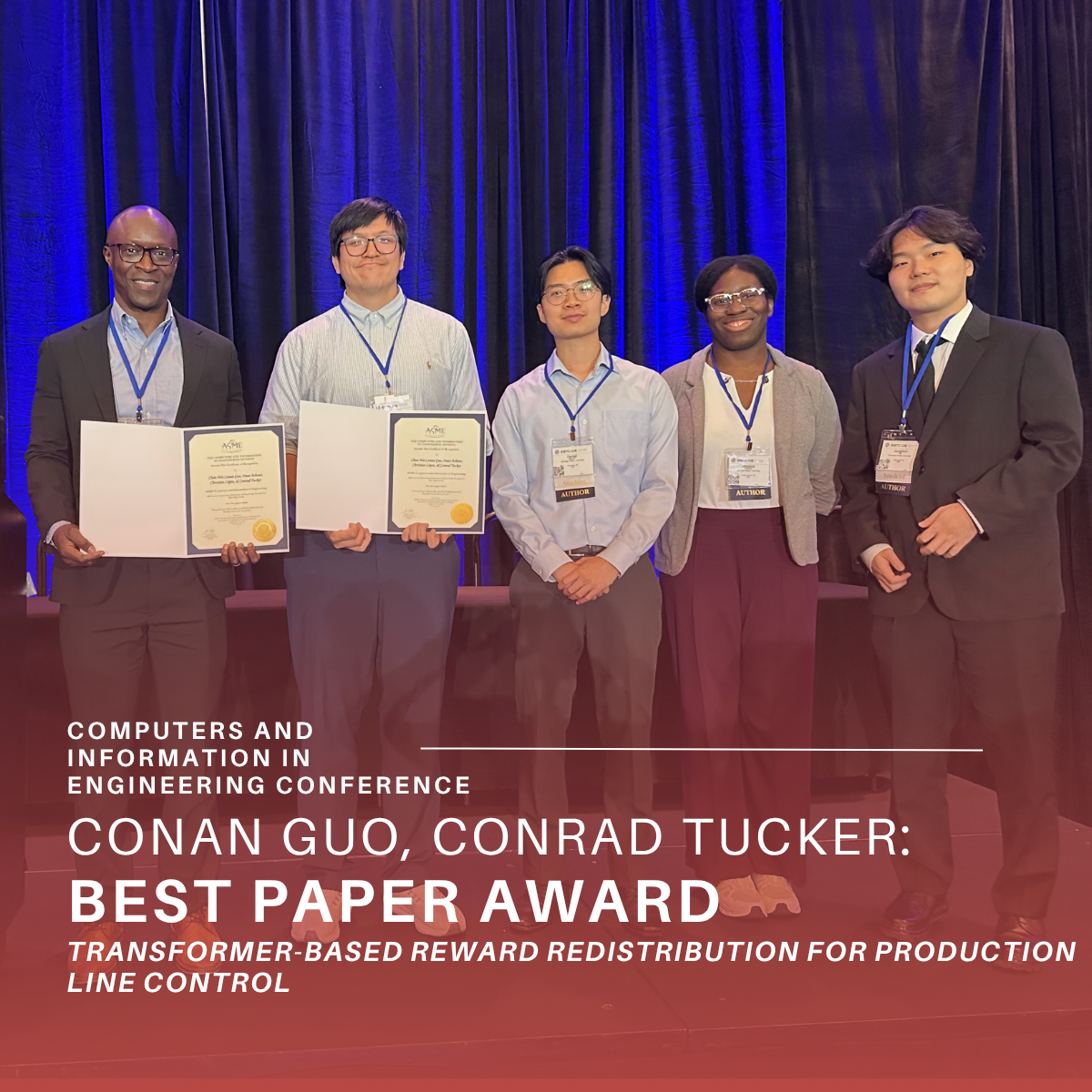
Conan Guo and Conrad Tucker received a best technical committee paper award for their work, Transformer-based Reward Redistribution for Production Line Control. Their research uses a Transformer to help reinforcement learning systems connect later outcomes on a production line back to the earlier decisions that caused them. This helps the AI learn which actions were most effective, without relying on manually designed rewards or extensive domain-specific tuning.
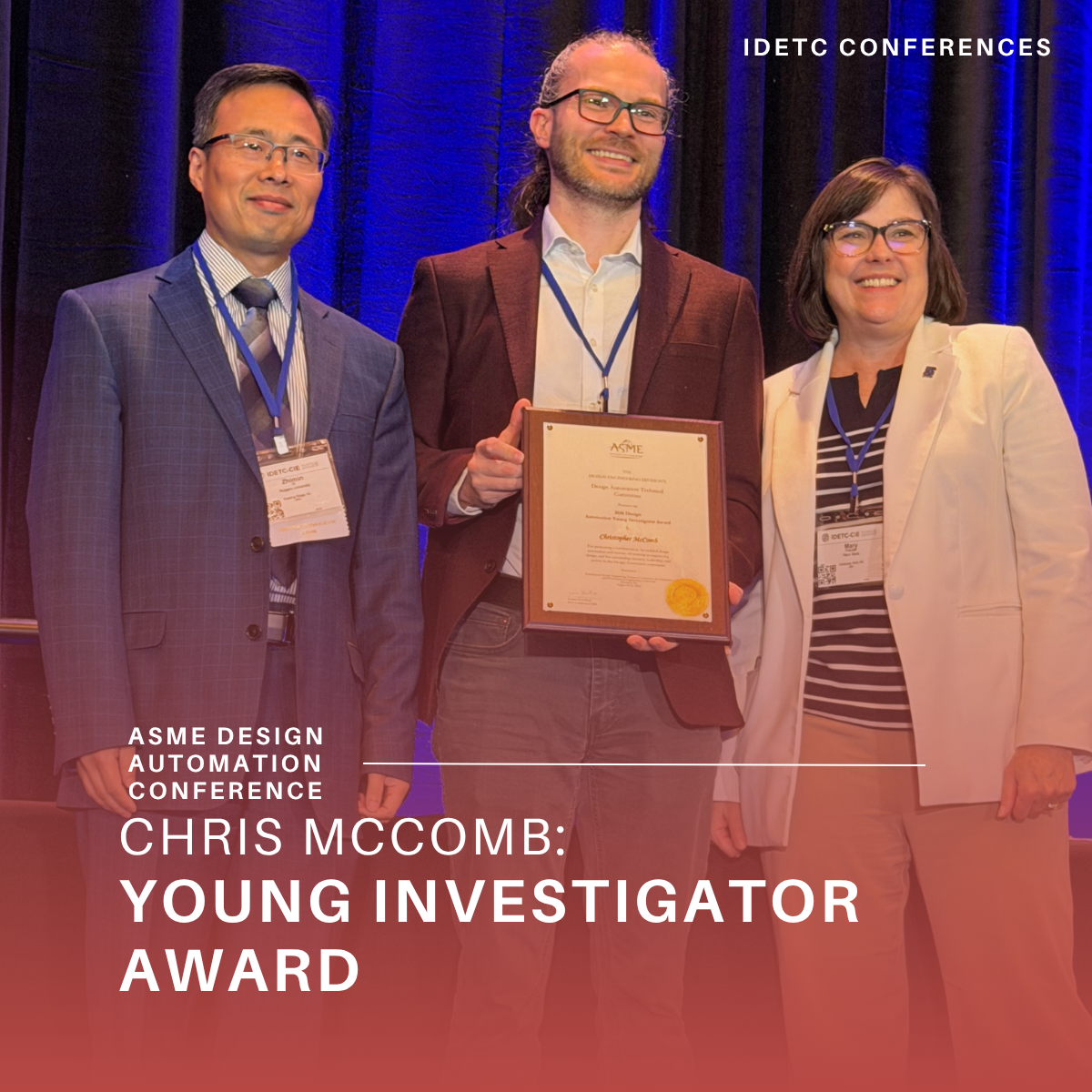
In addition to the three best paper awards, Chris McComb received the Young Investigator Award for pioneering contributions to Al-enabled design automation and human-Al teaming in engineering design, and for outstanding research, leadership, and service to the Design Automation community